Of the three corporations which have ever put in investor-overriding mission guardians in a for-profit construction, one resulted in spectacular failure, one already melted down as soon as, and the third filed confidentially an IPO on Monday.
A brand new Harvard Law paper, AI Company Governance and Ben & Jerry’s Threat, by professor Jesse Fried and S.J.D. candidate Idan Reiter, lands not simply as Anthropic enters the general public markets however at a second when OpenAI’s governance is underneath extra scrutiny than ever. A federal jury ruled against Elon Musk’s lawsuit on Might 18; former board members testified about being misled by CEO Sam Altman; and the company faces multiple wrongful loss of life lawsuits alleging ChatGPT contributed to self-harm and violence. In the meantime, OpenAI accomplished its conversion to a public profit company final October, a restructuring Fried argues doesn’t remedy the underlying downside.
The Ben & Jerry’s precedent
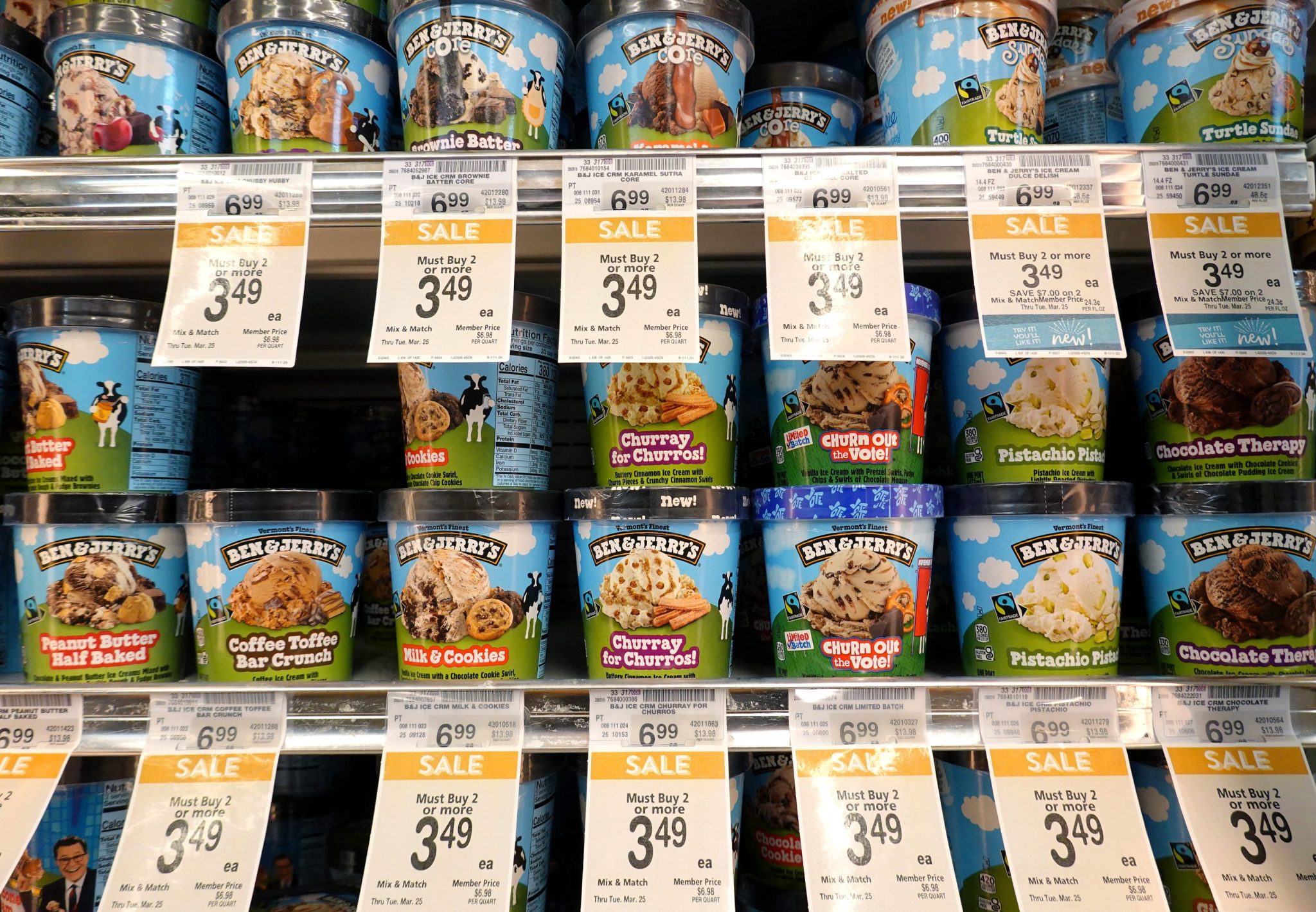
The paper’s authors name it the “Ben & Jerry’s danger,” or the hazard that mission guardians won’t solely hurt buyers, but additionally obtain the precise reverse of what they got down to do. When Unilever acquired Ben & Jerry’s in 2000, it agreed to put in self-perpetuating unbiased administrators who might override Unilever to guard the model’s social mission.
For twenty years, tensions stayed behind closed doorways. Then in 2021, the unbiased board introduced it will not renew the license of Ben & Jerry’s Israeli licensee, over Unilever’s objections. Counterboycotts, state divestments, activist investor interventions, lawsuits, and the resignation of Unilever’s CEO all got here subsequent, simply as the corporate misplaced billions in market worth.
Fried and Reiter argue that the guardians’ actions backfired fully. Unilever overrode the administrators in 2022 and gave the Israeli licensee rights to promote Ben & Jerry’s in Israel and its managed territories in perpetuity, which is precisely what the administrators had tried to forestall. Unilever then spun off its ice cream companies altogether, making certain the guardians might by no means impose prices on the mum or dad firm once more.
The mum or dad company fired Ben & Jerry’s CEO after a battle of political points, with Unilever on the time having “knowledgeable the Impartial Board” of the change. This induced the brand’s namesake Jerry Greenfield to quit in the course of the public dispute, and the July 2021 boycotts that ensued noticed Unilever’s market cap dropping by $20 to $26 billion within the months that adopted. The stock fell 8% in the first week alone, and was down greater than a fifth over the next six months. Extra so, seven states (Florida, Texas, New York, New Jersey, Arizona, Illinois), divested pension fund holdings, totaling virtually $1 billion.
“Mainly these folks might do no matter they needed, regardless of how a lot injury it will inflict on Unilever, they usually couldn’t simply be eliminated,” Fried instructed Fortune. He known as it “an ill-considered association” that he assumed nobody would ever replicate. Enter OpenAI.
OpenAI’s identical construction and identical downside
Earlier than its 2025 restructuring, OpenAI had nonprofit administrators controlling a for-profit subsidiary, the identical structure in a distinct business. The board fired Sam Altman in November 2023, reportedly partially over security issues, which then led to almost all of OpenAI’s 770 staff threatening to depart for Microsoft, thus forcing the board to reverse course. Altman returned, the safety-focused board members had been pushed out, and outstanding security researchers finally departed to begin competing ventures.
“I’m not saying these folks had been dangerous folks, or they did the unsuitable factor,” Fried mentioned. “I’m simply saying, when you take a look at it on reflection, they not solely put buyers in danger however achieved the precise reverse of their mission, as they noticed it. They thought that Sam Altman couldn’t be trusted to steer a protected OpenAI. He’s nonetheless there. All of the board members who cared about security are gone. Main AI researchers who had been extra involved about security have left. So it looks like general security has been harmed by the guardians’ try to extend security.”
The paper argues these guardians each broken buyers and undermined the very mission they had been appointed to guard.
The 2025 restructuring
OpenAI accomplished its conversion to a public profit company in Oct. 2025, with the nonprofit, now known as the OpenAI Basis, retaining management by the ability to nominate each director on the board. The Basis’s Security and Safety Committee holds veto rights over safety-related selections. On paper, mission governance survives.
“I make the argument that they’re not likely constrained any greater than the administrators had been constrained in 2023,” he mentioned. The present board was chosen by Altman himself. Practically each Basis director additionally sits on the board. Fried concedes that “they’re most likely not going to do something loopy” within the close to time period, however argues that governance constructions must be evaluated over a long time, not primarily based on the present solid of characters.
“Once you’re constructing a governance association, it has to work for the long run,” he mentioned. “You need to look past who’re the folks there now, and picture successors who aren’t as congenial. The world’s going to vary. That’s what occurred at Ben & Jerry’s.”
One element that has drawn consideration from critics: OpenAI removed the word “safely” from its mission assertion in the course of the restructuring. Fried considers this much less vital than it would seem. “I believe the elimination of the phrase ‘safely’ from the mission assertion shouldn’t be that consequential,” he mentioned. “The Basis remains to be mandated by state attorneys basic to give attention to security and safety, and retains veto rights on these points. I simply don’t suppose it’s going to make an enormous distinction.”
What issues him extra is the structural trajectory heading into an anticipated IPO. “If OpenAI has issue pulling off an IPO at an inexpensive valuation due to its construction, it wouldn’t shock me if OpenAI goes again to the attorneys basic and asks to have the October 2025 settlement modified,” he mentioned. “Sam Altman appears to be fairly efficient at getting what he needs.”
Anthropic’s IPO and kill swap
On Monday, Anthropic confidentially filed for an IPO, beating OpenAI in a cat and mouse sport of one-upmanship in current months as the 2 corporations continued to develop their valuations by the billions. Anthropic, the paper argues, is the higher mannequin, although not as a result of it solved the underlying pressure. Like OpenAI, Anthropic pairs a controlling mission entity (the Lengthy-Time period Profit Belief) with a public profit company. Save for one key distinction: supermajority of Anthropic’s buyers can terminate the Belief and take away the administrators it appointed.
Fried mentioned this kill swap is what makes the association workable. “It places a constraint on the guardians, as a result of they don’t need to be thrown out,” he mentioned. “If buyers actually don’t like what the guardians are planning on doing, I anticipate the guardians will again off,” including that “the guardians have some energy they usually use it to push issues in a sure course, however they’ll’t go too far.”
The Belief’s powers are additionally extra restricted than OpenAI’s Basis. It may possibly solely nominate a majority of the board, not the whole board, and sure selections require a supermajority on the board stage, additional diluting guardian management.
Nonetheless, Fried acknowledged a key caveat: Anthropic hasn’t been examined but. The kill swap is a concept about what’s going to occur underneath strain. “If Anthropic works for 10 or 15 years, perhaps any person will use a construction like that once more,” he mentioned. “However in any other case I don’t see it.”
Nobody elected to have this construction
Considered one of Fried’s most pointed observations is that OpenAI’s present governance wasn’t actually chosen by anybody. “OpenAI didn’t select its association apart from the preliminary nonprofit construction. After that alternative was made, OpenAI was constrained in the way it might evolve in response to the necessity for funds,” Fried mentioned. “As soon as OpenAI wanted funds, there was by no means a time limit the place folks checked out OpenAI’s for-profit arm and mentioned, that is the most effective of all potential worlds. It’s like the most effective that would have been accomplished, given the constraints.”
Anthropic, against this, was designed with intention. “They may have chosen no matter construction they needed. They selected this construction,” Fried mentioned, including the association carries actual prices even when working as meant: “As a substitute of getting only a founder CEO and buyers make selections, administration and buyers now additionally have to get buy-in from the Belief or the administrators it appoints. In a fast-moving enterprise, that may throw sand within the gears.”
And IPO forward
Solely three corporations have ever put in investor-overriding mission guardians in a for-profit context. Ben & Jerry’s resulted in what Fried and Reiter name a spectacular failure. OpenAI’s model has already melted down as soon as and is structurally contested heading into an IPO. Anthropic’s is untested and comes with a kill swap which will render it moot underneath actual strain.
The paper notes that when safety-focused researchers like Ilya Sutskever and Mira Murati left OpenAI to discovered their very own corporations, neither adopted a guardian construction. The pattern dimension is three, and of these, two have failed or been successfully neutered, and a 3rd simply filed for IPO.
Trending Merchandise

Lenovo Latest 15.6″ Laptop co...

Lenovo V14 Gen 3 Enterprise Laptop ...

HP Latest 14″ Ultral Gentle L...

Lenovo V-Collection V15 Enterprise ...

Lenovo Ideapad Laptop computer Touc...

Lenovo IdeaPad 1 Pupil Laptop compu...

HP 17.3″ FHD Important Enterp...

Lenovo IdeaPad 1 Laptop computer, 1...

HP Pocket book Laptop computer, 15....

HP 14 Laptop computer, Intel Celero...